Before we ever pitched an AI system to a client, we built one for ourselves. Here's what running a 15+ client marketing agency looked like before the Internal Hub, and what changed after.
Social Creatives is a Christchurch marketing agency. Before the Internal Hub, running it day to day meant juggling a pile of separate, disconnected tools: markdown files for content plans, spreadsheets for finances, scattered notes for ad performance, and to-do lists that only one person could see at a time. Nothing talked to anything else.
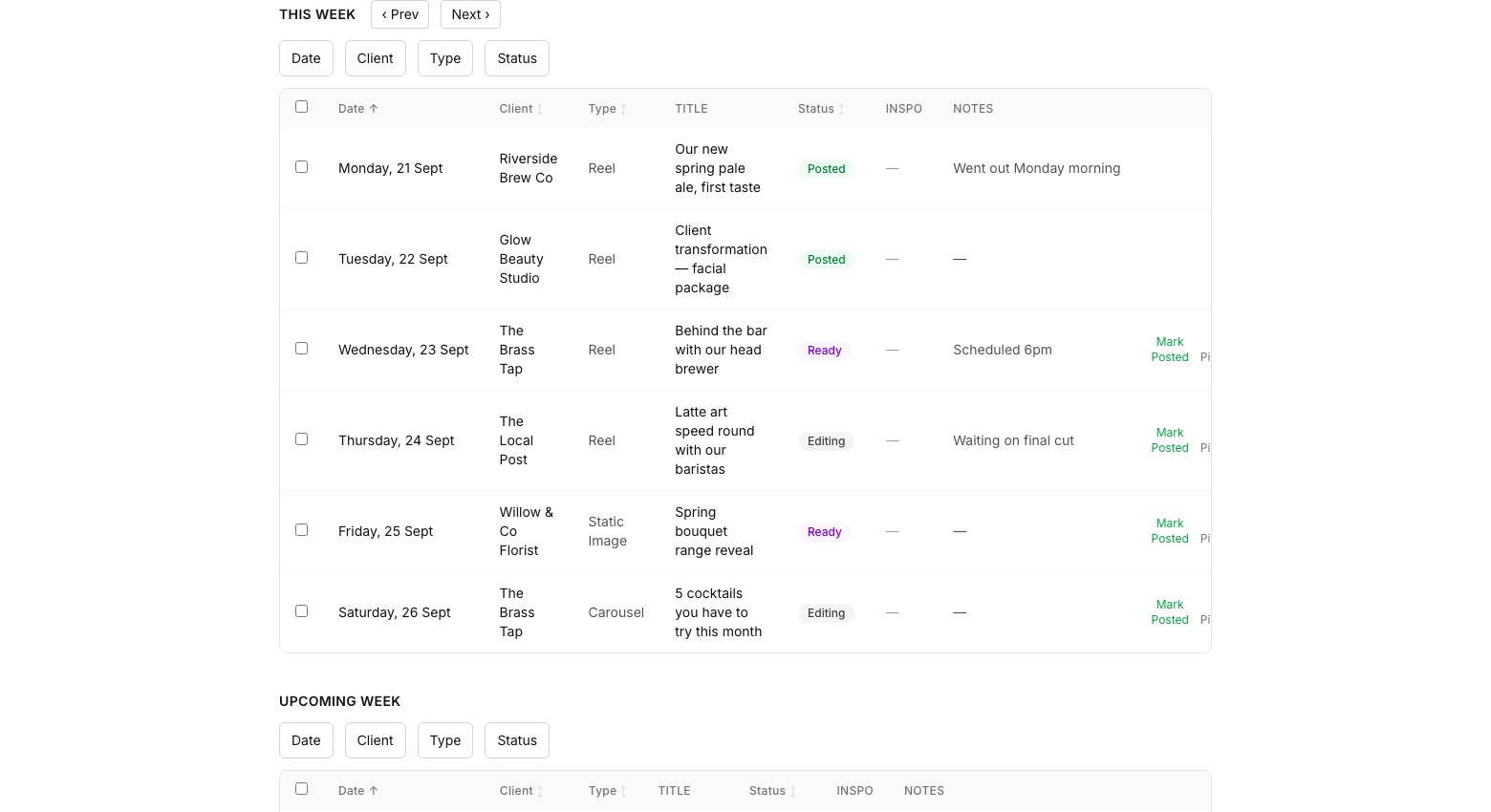
Content plans lived in a single markdown file. When it fell out of date, ideas quietly disappeared, some client content existed only in a frozen file no one was checking.
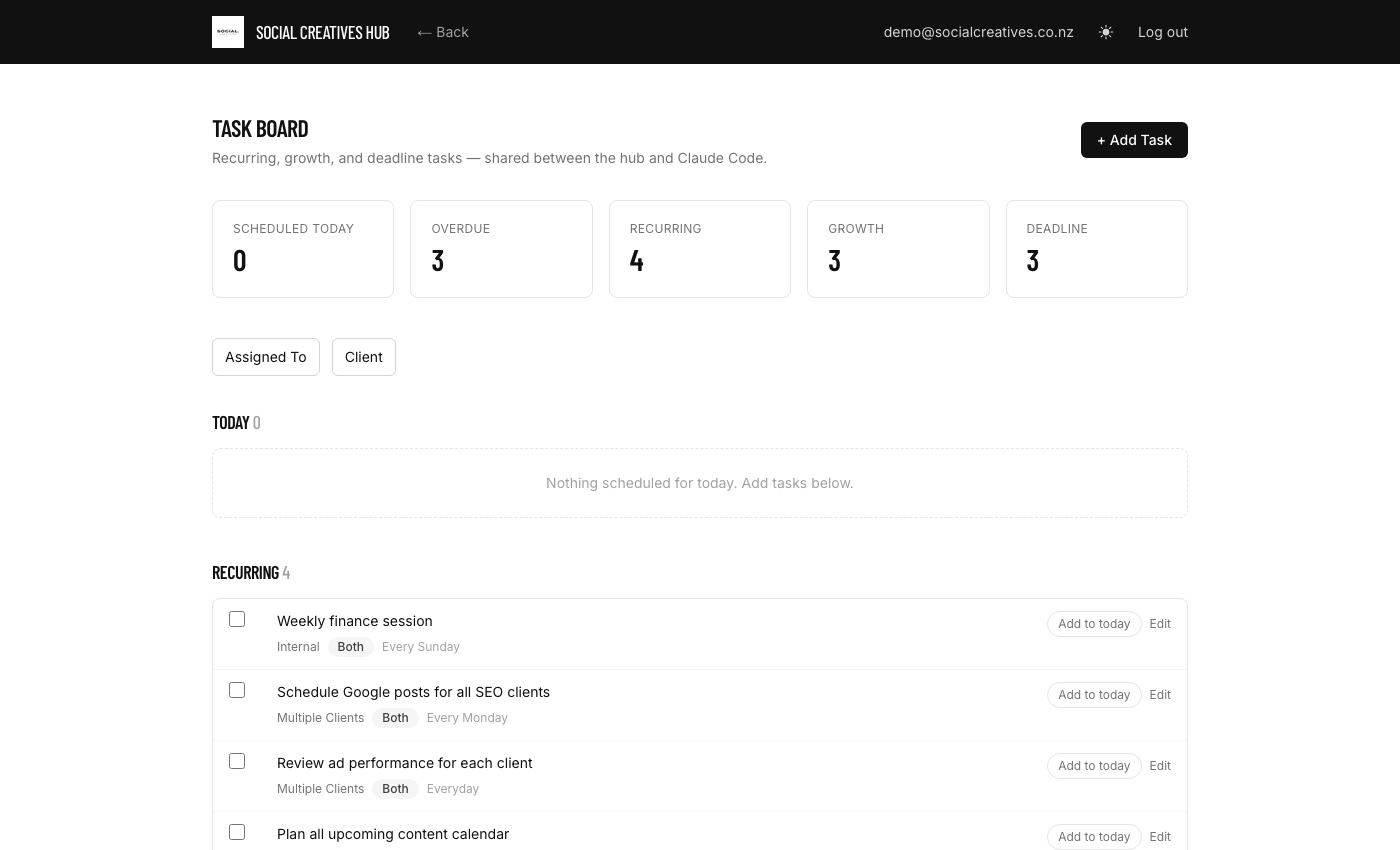
Tasks were tracked in personal to-do lists. Recurring work, growth projects, and deadlines had no shared view between team members.
Ad performance, SEO scans, and client contracts were scattered across files and folders, no way to see it all in one place, per client or across the business.
Instead of patching each problem separately, we built a single system, the Internal Hub, that Social Creatives now runs its entire business on. Every component was built to solve a specific, real pain point we were hitting ourselves.
Every client's info, contracts, strategies, and reports in one place instead of scattered files.
A kanban content pipeline and calendar, replacing the markdown file that could silently go stale.
Recurring, growth, and deadline tasks visible to the whole team, not just one person's private list.
Every campaign and check-in logged centrally, comparable across every client.
Scan history and Google Business Profile posts tracked per client, in one dashboard.
MRR, subscriptions, and P&L in a single view instead of a manual ledger.
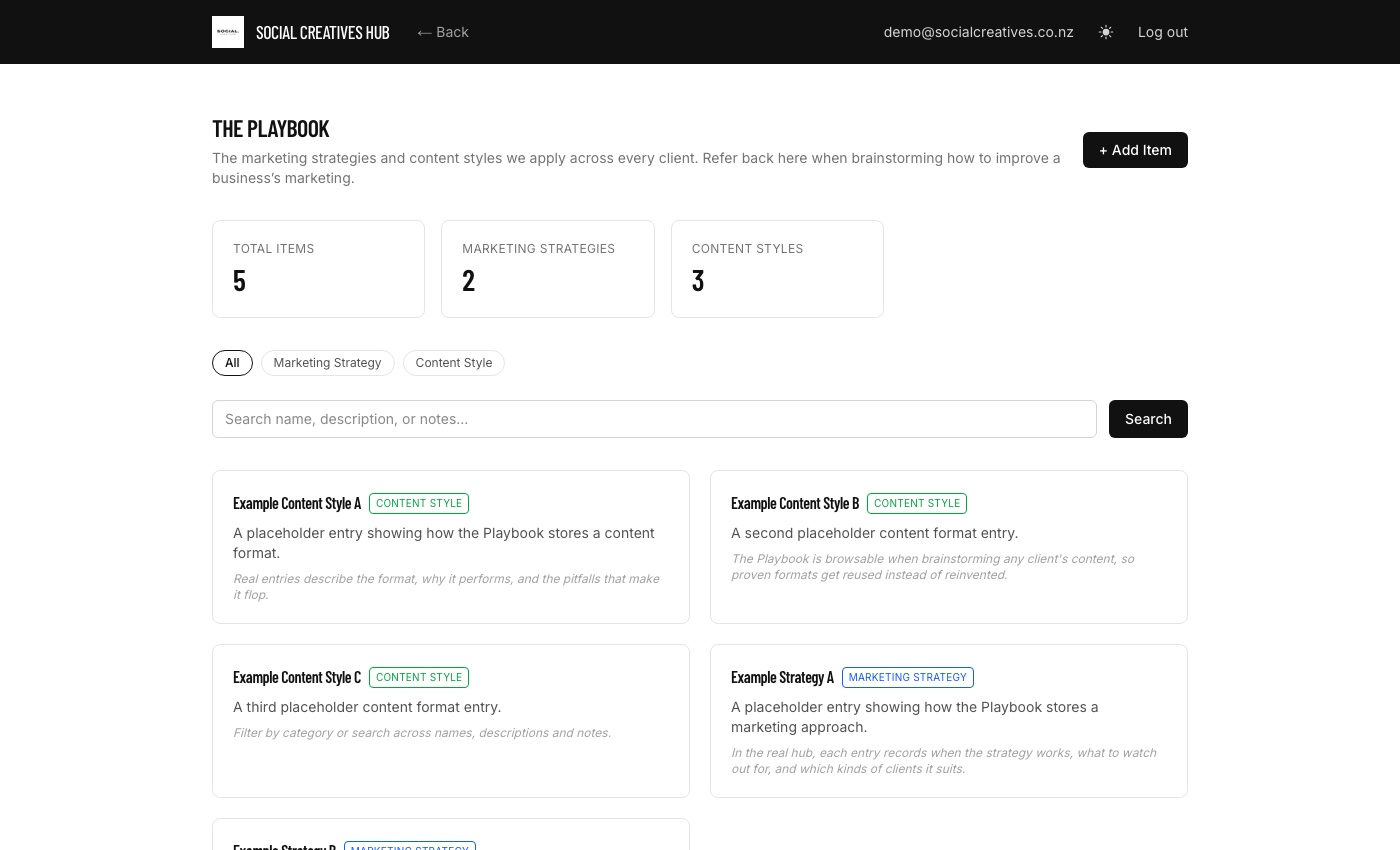
No mockups, these are real screens from the live demo, filled with fake data so you can click around yourself.
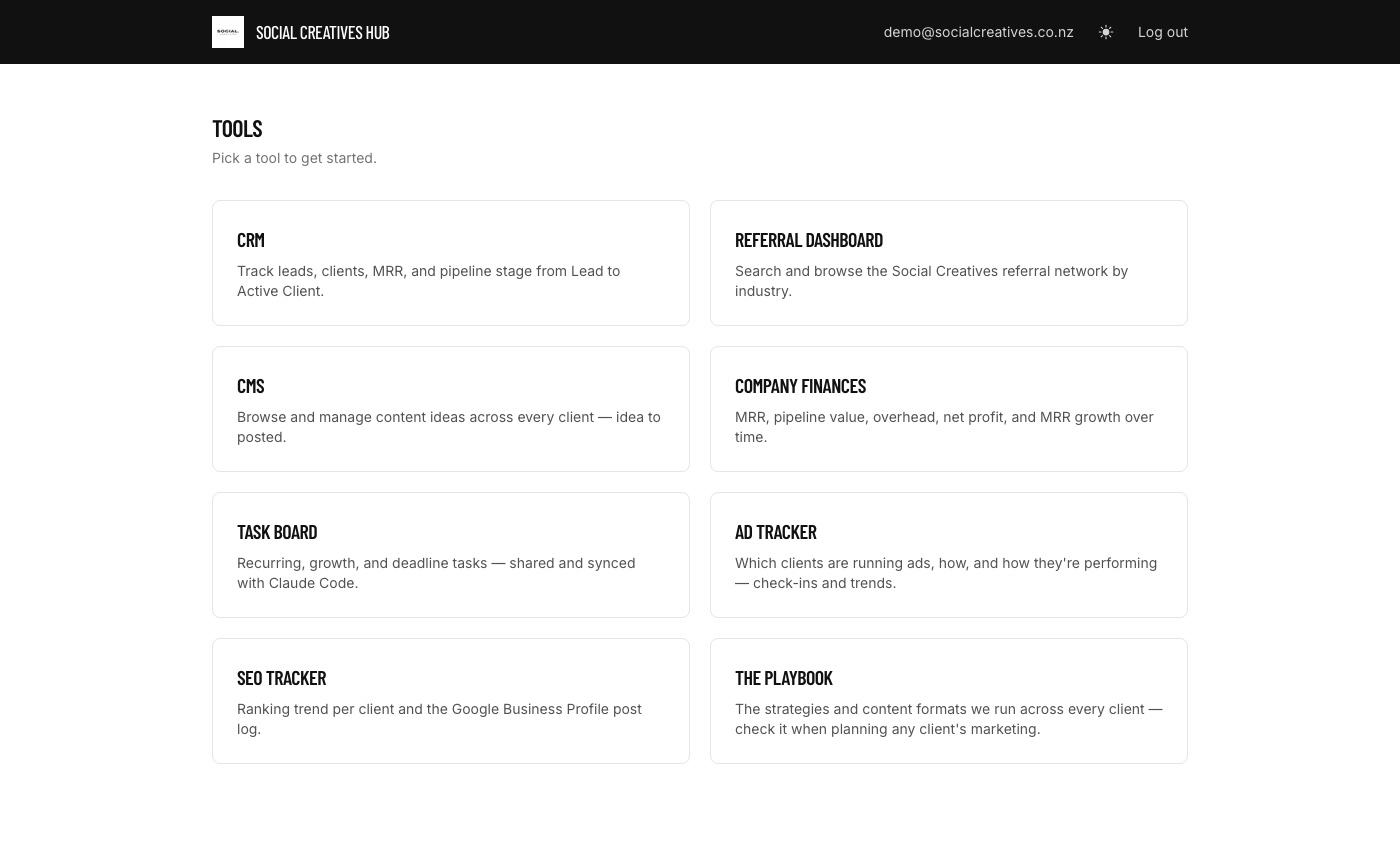
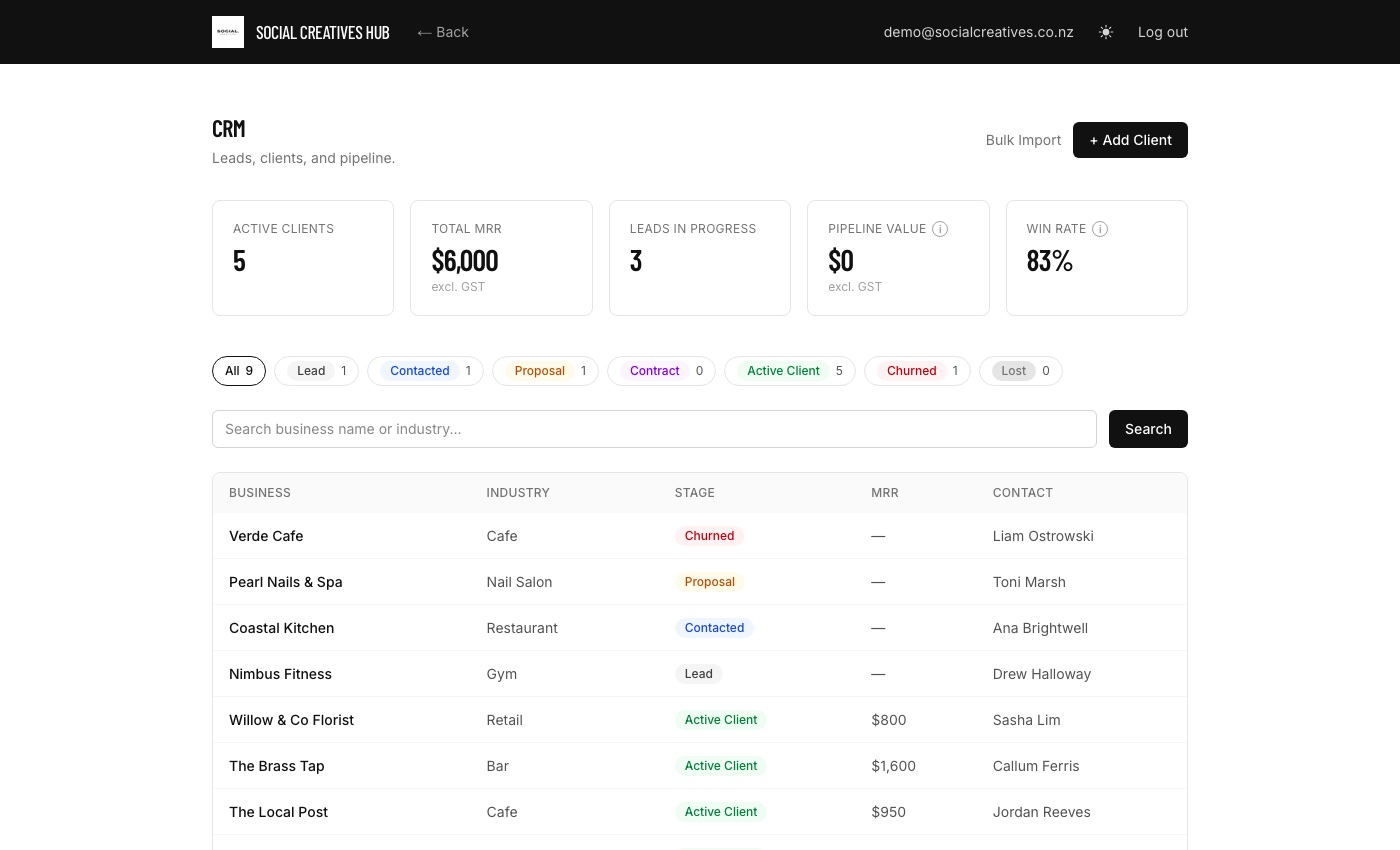
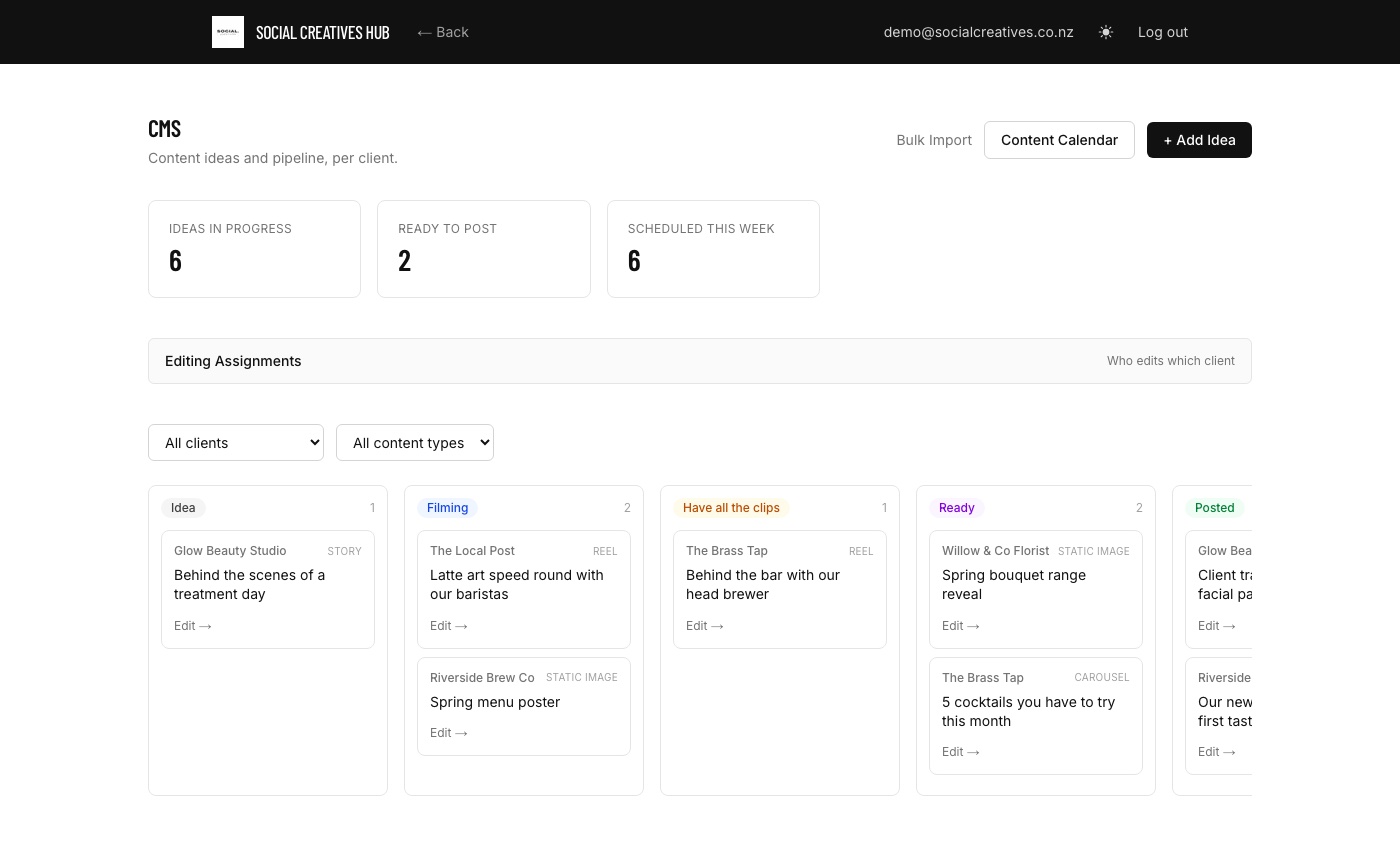
Every tool above is two-way synced with the agency's AI brain, running on Claude. The hub isn't a dashboard someone has to remember to keep updated — it's the same data the AI reads and writes.
In practice that looks like this: an ad finishes, and instead of opening the tracker and filling in a form, you send a voice note — "the Tuesday promo ad is done, $80 spent, 23 new followers" — and the Ad Tracker updates itself, along with the client's records and anywhere else that result matters. Same for tasks, content, SEO notes, and finances.
That's the layer on top: the tools stay current because the AI works inside them too, not beside them.
This is the same approach behind everything Cerebria builds: prove it on a real business before offering it to a client. The Internal Hub now runs Social Creatives' day-to-day work across CRM, content, tasks, ads, SEO, and finances, and it's the reason we're confident enough in this model to build the same kind of system for other businesses.
The Internal Hub is live with dummy data, click around exactly like a real user would.
Open the live demo